
In steel mill operations, the driver experience is not just a convenience issue. It is an operational issue, a safety issue, and increasingly, a business performance issue.
Every day, mills receive trucks driven by people who may be unfamiliar with the site, uncertain about where to go, and required to complete safety procedures before entering active operations. Many of those drivers speak different languages. Yet too often, the arrival experience still depends on paper forms, kiosks, verbal instructions, or radio communication to get them through the gate and to the right destination.
That approach creates friction from the start.
It slows gate operations. It increases the chance of confusion. It makes safety harder to enforce consistently. And once a driver is inside the facility, it leaves too much room for wrong turns, delays, congestion, and unnecessary risk.
For steel mills focused on safety, throughput, and coordination, the answer is not just better check-in. It is a fully digital, multi-language driver arrival experience that starts before the driver reaches the gate and continues all the way to the final yard or loading location.
Moving Safety and Check-In Into the Driver’s Cab
One of the biggest opportunities to improve steel mill operations is to shift safety verification and check-in away from manual gate processes and into the driver’s mobile experience.
With Glympse, drivers can complete required safety questions on their mobile device up to 24 hours before their scheduled appointment. That means they can arrive prepared instead of creating backups at the gate while trying to complete required steps on-site.
And if they have not completed the process ahead of time, they can still do it directly from their phone during digital gate check-in.
Once completed, the driver receives a digital gate pass number and a secure link to navigation all on their own device, in their preferred language.
This simple shift reduces gate friction immediately. It shortens check-in time, removes paperwork, and helps mills avoid the bottlenecks that come from trying to push every driver through the same manual process at the point of entry.
Eliminating Language Barriers Where It Matters Most
Language barriers in industrial operations are not a minor inconvenience. They are a real source of safety risk, operational delay, and avoidable confusion.
When drivers do not fully understand safety instructions, PPE requirements, site rules, or verbal directions, mills are forced to rely on inconsistent workarounds. That can mean repeated explanations, ad hoc translation, miscommunication at the gate, and drivers entering the site without full clarity on where to go or what is expected.
A digital, multi-language driver experience changes that.
Safety questions, check-in instructions, and navigation guidance can all be delivered in the driver’s preferred language, creating a much more consistent and understandable experience from the beginning. Instead of depending on someone at the gate to explain a process under pressure, mills can provide the right instructions clearly, digitally, and at scale.
That helps improve safety understanding, reduces communication breakdowns, and creates a more predictable operation for everyone involved.
Navigation That Works Inside the Mill
Getting through the gate is only part of the challenge.
Steel mills are large, active, private environments with internal roads, scales, yards, staging areas, restricted zones, and loading locations that traditional consumer navigation apps do not understand. Once inside, a lost or misrouted driver is more than an inconvenience. That driver can disrupt traffic flow, create safety exposure, and slow down site operations.
That is why navigation inside the facility matters just as much as the check-in process itself.
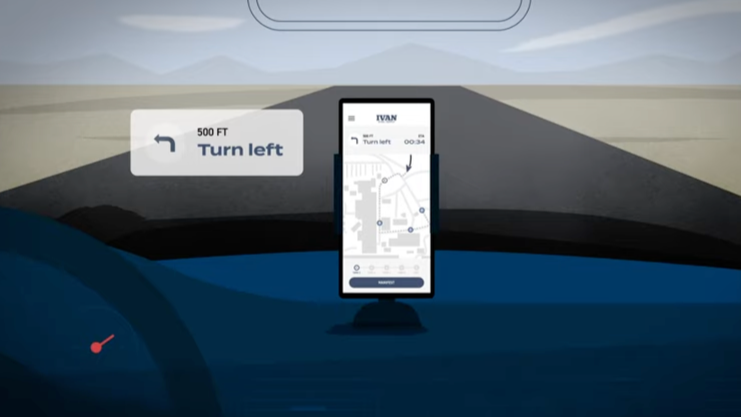
With Glympse, drivers receive turn-by-turn, voice-enabled navigation through private mill roads and operational areas in their selected language. Instead of relying on verbal instructions or guessing their way through an unfamiliar facility, drivers are guided directly to the correct location.
This reduces wrong turns, prevents unnecessary stoppages, and helps drivers move with more confidence through environments that demand precision.
From Blind Spots to Live Operational Visibility
While the driver benefits from a better arrival experience, mill operators gain something just as important: real-time visibility into what is happening inside the yard.
As trucks move through the facility, operations teams can view live driver locations on a shared console, allowing them to monitor traffic patterns, identify congestion points, and respond more quickly when delays occur. Rather than operating with fragmented information, teams can coordinate from a shared, live view of site activity.
This is where the value extends beyond driver convenience and into operational control.
A KPI dashboard can help mills track truck arrivals, yard movement, and turnaround performance over time, making it easier to spot inefficiencies and improve throughput. Loader teams, crane operators, and yard staff can better anticipate inbound activity instead of reacting after a truck has already arrived or been delayed.
The result is a more coordinated site and a clearer picture of how work is actually flowing.
Why This Matters to the Business
For steel mills, digitizing the driver arrival experience delivers value across three critical areas: safety, velocity, and utilization.
1. Safer Operations
Delivering safety orientations, requirements, and instructions in the driver’s native language helps reduce one of the most common breakdown points in industrial environments: misunderstanding. When combined with digital workflows and future opportunities like no-go zone alerts, dynamic re-routing, and time-stamped verification records, mills can create a stronger and more defensible safety process.
2. Faster Throughput
Manual gate procedures, kiosk delays, and navigation confusion slow down the operation before the truck even reaches its destination. By moving check-in and safety verification into the cab and giving drivers guided navigation through the facility, mills can reduce gate congestion, shorten cycle times, and improve overall site throughput.
3. Better Use of Labor and Assets
Real-time visibility helps teams prepare instead of wait. Loader and crane operators can see inbound movement more clearly. Yard teams can coordinate more efficiently. Expensive equipment is less likely to sit idle because of preventable gate or navigation delays. Instead of spending labor on manual intervention and radio coordination, teams can focus on keeping freight moving.
Core Capabilities
A digital driver experience for steel mills can include:
- Mobile driver check-in and safety verification
- Multi-language delivery of safety instructions and site guidance
- Flexible safety completion before arrival or at the gate
- Digital gate pass issuance
- Voice-enabled turn-by-turn navigation through private mill roads and yards
- Live console visibility into truck movement on-site
- Operational dashboards for arrivals, yard movement, and turnaround performance
The Bigger Opportunity for Steel Mills
The steel industry has already invested heavily in production efficiency, yard planning, and plant operations. But the driver arrival experience often remains one of the last manual, fragmented parts of the process.
That gap matters.
Because when drivers are delayed, confused, or misrouted, the impact spreads quickly. Gate teams get backed up. Traffic flow suffers. Equipment waits. Safety exposure rises. And operations teams lose time reacting to issues that could have been prevented upstream.
Glympse helps steel mills close that gap.
By combining digital check-in, multi-language safety verification, private-site navigation, and live yard visibility, mills can transform the arrival experience from a friction point into a coordinated operational advantage.
This is about more than helping a truck get through the gate. It is about improving the flow, safety, and performance of the entire site.