
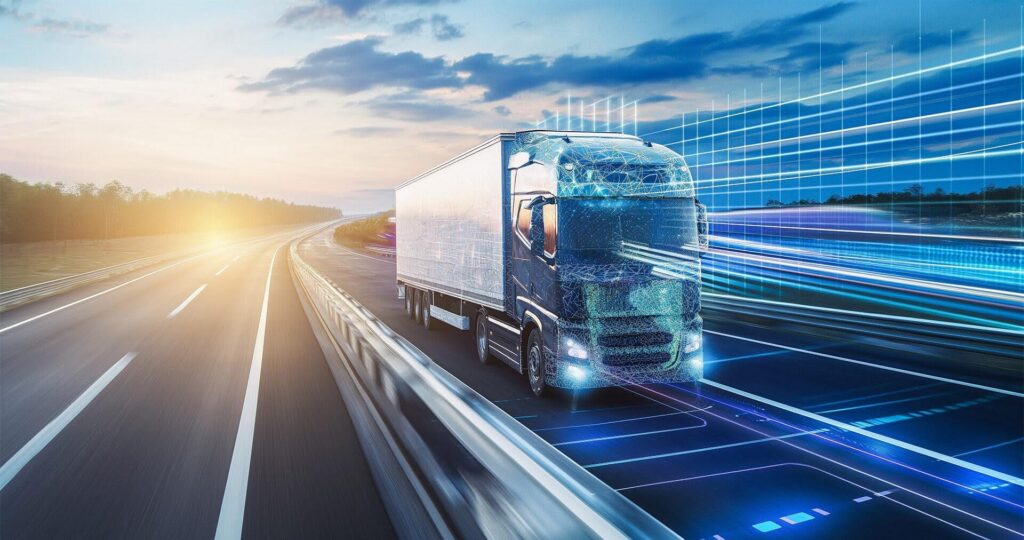
This week, headlines highlighted a major milestone in logistics: PepsiCo is now using fully driverless trucks in commercial operations, delivering products on fixed routes with reported on-time performance exceeding 99%. While the media attention naturally focuses on autonomous vehicles, the bigger story may be something else entirely: visibility.
Whether a vehicle is driven by a human, assisted by AI, or operating autonomously, one requirement remains unchanged: customers, dispatchers, and operations teams need to know where it is, when it will arrive, and whether something has gone wrong.
The Real Innovation Isn’t the Truck
For years, logistics technology has focused on the vehicle itself—better engines, telematics, sensors, cameras, and now autonomous driving systems.
But the most successful logistics organizations have realized that visibility creates just as much value as transportation.
Customers no longer accept vague delivery windows. In 2026, they expect to see live vehicle locations, accurate ETAs, proactive notifications, and real-time updates throughout the delivery process. Industry analysts consistently point to visibility and customer communication as core requirements for modern delivery operations.
The question has shifted from:
“Where is the truck?”
to
“How do we share that information with everyone who needs it?”
Visibility Is Becoming the Competitive Advantage
Recent logistics research shows that last-mile delivery remains the most expensive portion of the supply chain, accounting for more than half of total shipping costs in many operations. Organizations are increasingly investing in GPS tracking, route optimization, and real-time customer communications to reduce costs while improving service.
Companies that provide real-time visibility benefit from:
- Fewer inbound “Where is my order?” calls
- Improved customer satisfaction
- Better delivery success rates
- Faster response to delays and exceptions
- Increased operational efficiency
- More accurate performance measurement
The common denominator behind each of these outcomes is location intelligence.
Why GPS Data Alone Isn’t Enough
Many fleets already know where their vehicles are.
The challenge is turning that location data into a meaningful customer experience.
A GPS coordinate by itself doesn’t help a customer waiting for a technician, a homeowner expecting an appliance delivery, or a facility manager preparing for an incoming truck.
What matters is transforming raw GPS data into:
- Accurate ETAs
- Branded customer experiences
- Automated notifications
- Exception management
- Shared operational awareness
That’s where modern visibility platforms play a critical role.
The Next Era of Last-Mile Operations
As autonomous vehicles, AI-powered routing, and predictive logistics continue to evolve, one trend is becoming clear: visibility is no longer optional.
Industry experts increasingly describe real-time tracking and end-to-end visibility as the new standard for logistics operations rather than a premium feature.
The organizations that win in the next decade won’t simply move products faster.
They will create confidence through transparency.
Customers want to know when a delivery is coming. Operations teams want to know where assets are. Businesses want to reduce uncertainty.
Regardless of how advanced transportation becomes, the need for shared visibility remains constant.
What This Means for Businesses Today
The future of logistics isn’t just autonomous vehicles.
It’s connecting drivers, dispatchers, facilities, customers, and partners through one shared view of what’s happening in real time.
At Glympse, we’ve seen firsthand that providing accurate ETAs, live location visibility, and proactive communication can dramatically reduce status calls, improve customer experiences, and create measurable operational savings.
The technology powering logistics may continue to change.
The need for visibility never will.